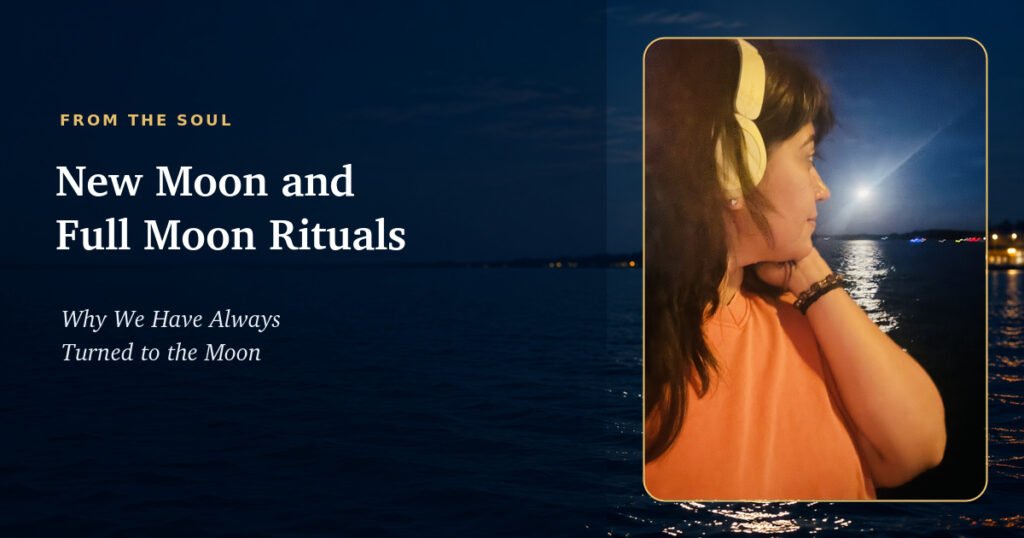
Earlier this year, I started doing new moon and full moon rituals.
I cannot fully explain what changed, but I can feel that something did. The moon has an energy that I experience differently from anything else. Every time I make space to connect with it, I come away feeling lighter, more open and more connected to myself.
I have cried during moon rituals. I have danced, meditated, journaled and pulled tarot cards. Sometimes, I simply sit by the window and talk to the moon. I tell it what I am carrying, what I am ready to release and what I hope to welcome into my life.
On other nights, I practise trataka by resting my gaze on the moon and allowing my mind to become quiet. I may sit there for several minutes without asking for anything.
Each experience is different. The release is always real.
What is a moon ritual?
A moon ritual is an intentional spiritual practice performed around a particular phase of the moon, most commonly the new moon or full moon.
It can include prayer, meditation, journaling, tarot or oracle cards, movement, music, silence or simply spending time beneath the moon.
You do not need an elaborate altar or a collection of spiritual objects. A quiet corner, a journal and your willingness to be present are enough. The ritual comes from the attention and meaning you bring to the moment.
Humans have followed the moon for thousands of years
Long before calendars appeared on our phones, people looked to the sky to understand the passage of time.
The lunar cycle takes approximately 29.5 days, and the connection between the moon and our concept of a month runs deep. The British Museum explains that months have been used as units of time for thousands of years, while the Smithsonian notes that Chinese, Hindu and Jewish calendars have all been shaped by lunar cycles.
Before 2000 BCE, the Babylonians were already organising their year into alternating 29-day and 30-day lunar months, according to the National Institute of Standards and Technology.
The moon helped communities mark seasons, festivals, religious observances and agricultural rhythms. It gave people a shared moment to pray, fast, gather, celebrate or begin again.
The specific beliefs and practices differed across cultures. There was never one universal moon ritual. The recurring thread was the human desire to pause and acknowledge the changing sky.
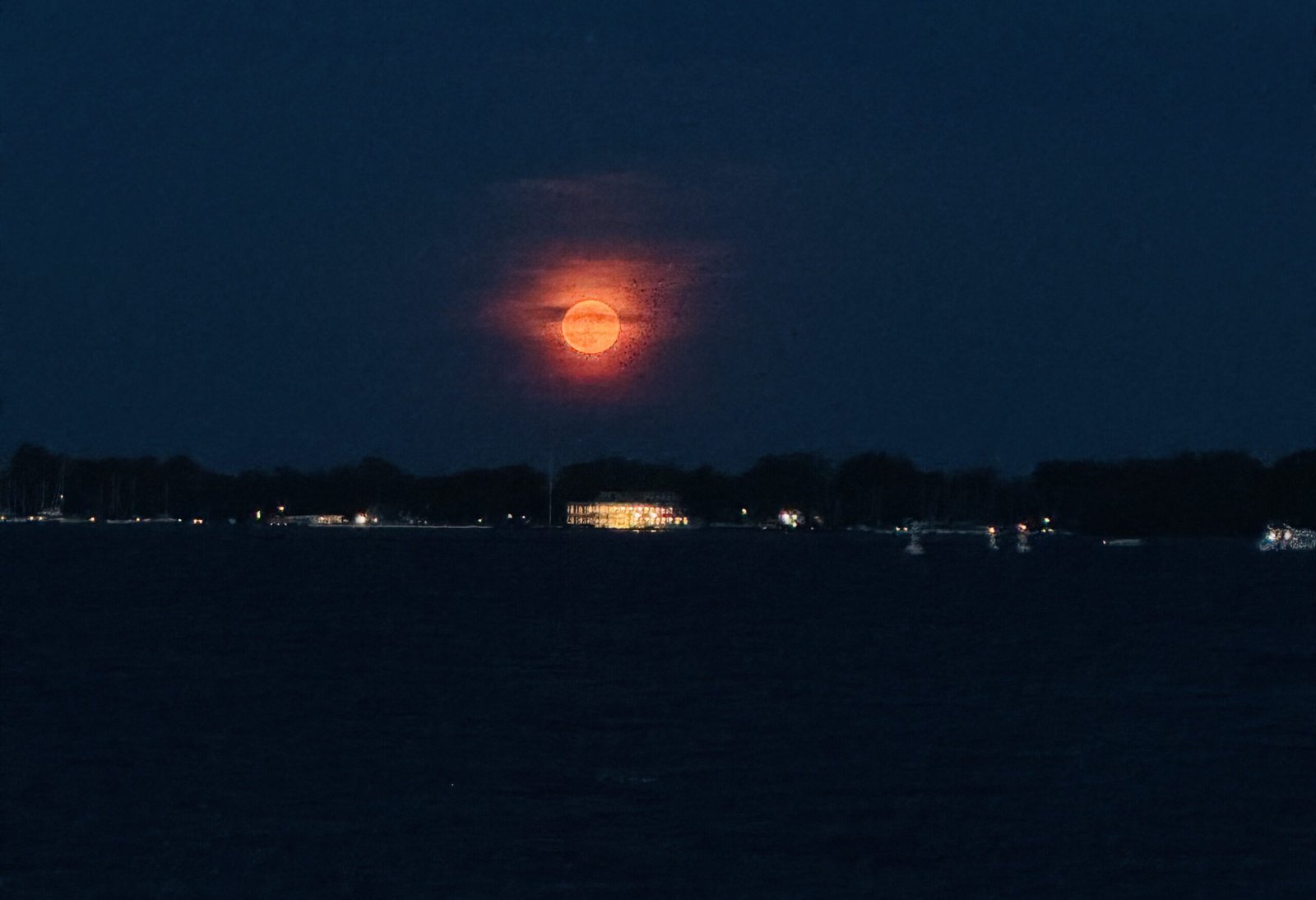
Moon rituals across spiritual traditions
In Hindu traditions, the new moon is known as Amavasya and the full moon as Purnima. Different Amavasya and Purnima days are associated with prayer, fasting, devotion, remembrance, charity and spiritual observances.
Several Hindu festivals are also connected to specific lunar days. Diwali, for example, is celebrated on an Amavasya, while Guru Purnima is observed on a full moon.
Modern Wiccan practitioners often gather for lunar observances called esbats, commonly around a full moon and sometimes around a new moon. These gatherings may involve prayer, meditation, healing work, reflection or spiritual practice. Wicca is a modern religious tradition, so its esbats should not be presented as one unchanged ritual inherited from ancient witches. They are part of a living spiritual practice with their own history.
Yogic traditions also passed down trataka, a concentration practice involving a steady gaze on a single point or object. Classical sources commonly describe candle-gazing. My practice of softly resting my gaze on the moon is my personal way of bringing that focused attention into a lunar ritual.
Sages, priests, healers, farmers, families and modern witches have all found their own reasons to look upwards. Their rituals may not be the same, but the moon continues to invite attention.
The different energy of a new moon and a full moon
The moon moves through a continuous cycle, yet the new moon and full moon feel like natural spiritual milestones.
New moon energy
The new moon begins a fresh lunar cycle. Because the moon is hidden from view, its energy is often associated with the inner world, possibility and beginnings that have not yet taken form.
A new moon ritual may help you:
- Set an intention
- Begin something new
- Listen to a desire you have been ignoring
- Decide what you want to welcome
- Plant the emotional or spiritual seed for the coming cycle
The darkness of the new moon can feel quiet and private. It gives you space to hear yourself before rushing into action.
Full moon energy
The full moon brings light and visibility. Spiritually, it is often associated with culmination, heightened awareness, gratitude and release.
A full moon ritual may help you:
- Recognise what has come to the surface
- Acknowledge how far you have come
- Release a pattern, feeling or attachment
- Express an emotion you have been holding
- Celebrate something that has grown
- Create space for the next cycle
For me, the full moon often feels emotionally expansive. It gives whatever I am carrying somewhere to go. Sometimes that comes through tears. Sometimes it comes through movement, laughter or dancing.
Every moon carries a different spiritual invitation
Every new moon and full moon also takes place in a particular zodiac sign. In astrology, that sign gives the moon its theme and helps us understand the areas of life being illuminated.
One moon may draw attention to relationships and emotional safety. Another may focus on career, confidence, creativity, communication, boundaries or purpose.
The same moon can also speak differently to each sun sign. It may invite one person to release control, while encouraging someone else to use their voice or welcome a new beginning.
Learning about the zodiac sign of each moon has made my rituals feel more intentional. I am no longer working with a vague idea of “full moon energy.” I understand the specific emotional and spiritual conversation that the moon is inviting me into.
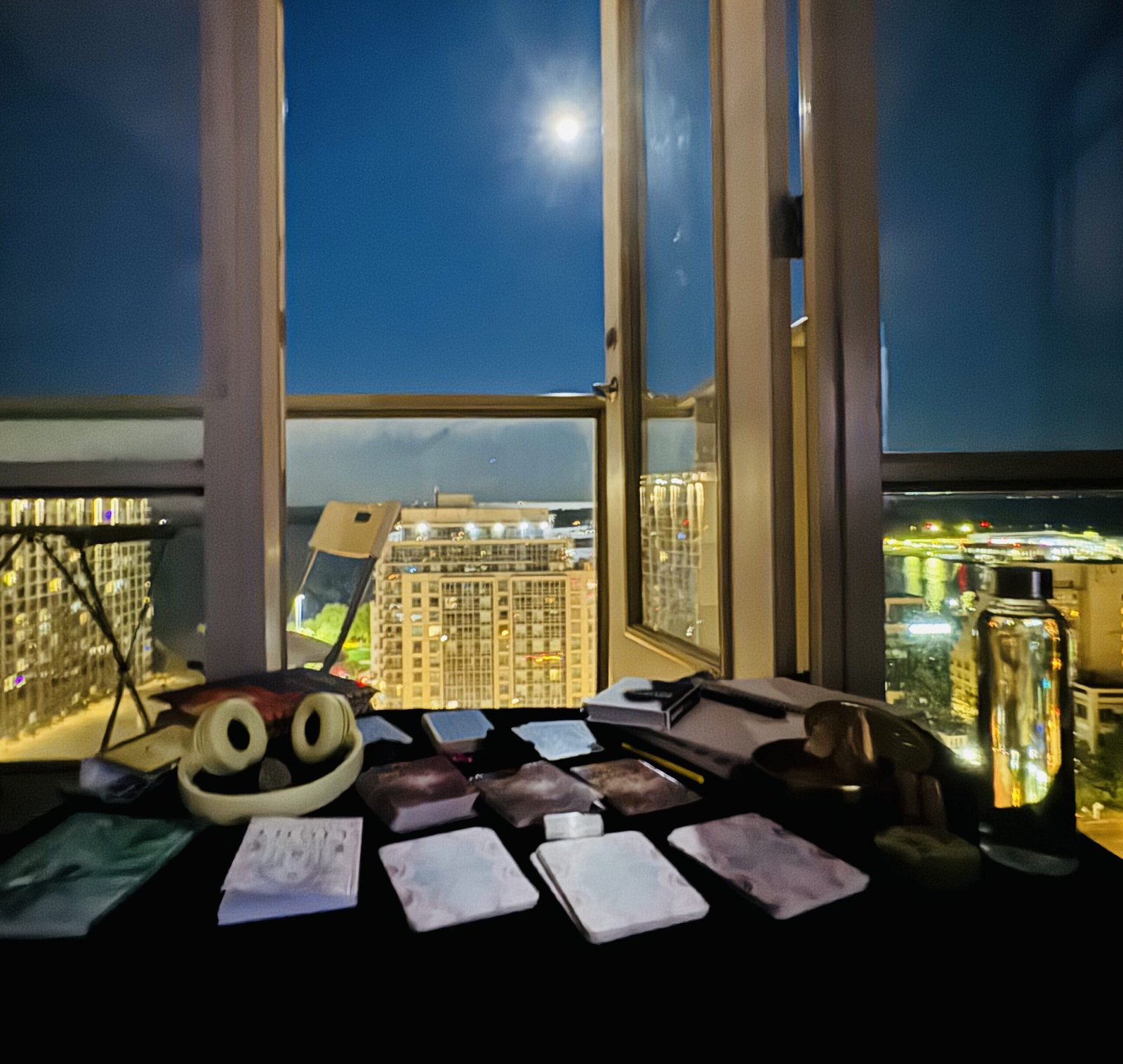
What my moon rituals look like
I do not perform the same ritual every time. I pay attention to what I am feeling and allow the practice to meet me there.
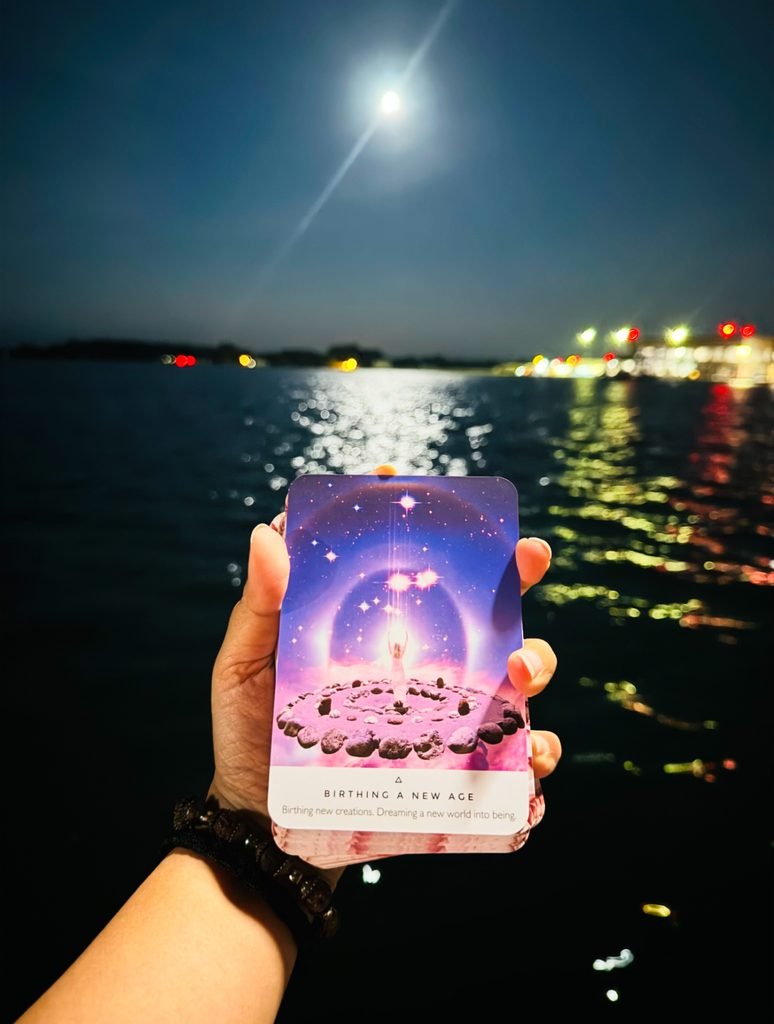
I may light a candle and begin with a few minutes of meditation. I may pull tarot or oracle cards and ask what I need to understand about the current cycle.
Sometimes I write until something honest appears on the page. Sometimes I speak directly to the moon.
You can talk to it too.
Tell the moon what has been difficult. Tell it what you are afraid to let go of. Speak about the life you are trying to create. Say the things you have been repeating silently inside your head.
You may feel emotional. You may feel peaceful, playful or unexpectedly uplifted. You may feel nothing dramatic at all. The ritual still gives you a moment to stop performing for the outside world and listen to what is happening within you.
A simple moon ritual for beginners
You can begin with this gentle practice:
- Create a quiet space. Sit near a window, step outside or choose a comfortable place where you will not be disturbed.
- Learn about the moon. Notice whether it is a new moon or full moon and which zodiac sign it occupies.
- Check in with yourself. Ask what you are feeling, what has been occupying your mind and what currently needs your attention.
- Write or speak. Set an intention during the new moon. During the full moon, name what you are ready to acknowledge, appreciate or release.
- Choose a practice. Meditate, pull cards, journal, pray, listen to music, dance or sit quietly with the moon.
- Close with gratitude. Thank God, the Universe, the moon or your own inner guidance—whatever feels spiritually honest to you.
Your ritual can take ten minutes or an entire evening. Sincerity matters more than length.
The energy I cannot fully explain
The moon has a measurable physical relationship with Earth. Its gravitational influence helps create the rhythm of our ocean tides, as NASA explains.
Scientific research has not reached one clear conclusion about whether lunar phases directly affect human emotions or behaviour. Some studies have observed changes in sleep around the lunar cycle, while others have found no meaningful connection.
I experience lunar energy spiritually and personally. I do not need to turn that experience into a scientific claim.
The ritual helps me feel. It gives me permission to release emotions that have been sitting beneath the surface. It brings rhythm to my spiritual life and reminds me that everything moves through phases.
Some things grow. Some become visible. Some need to be released. Then another cycle begins.
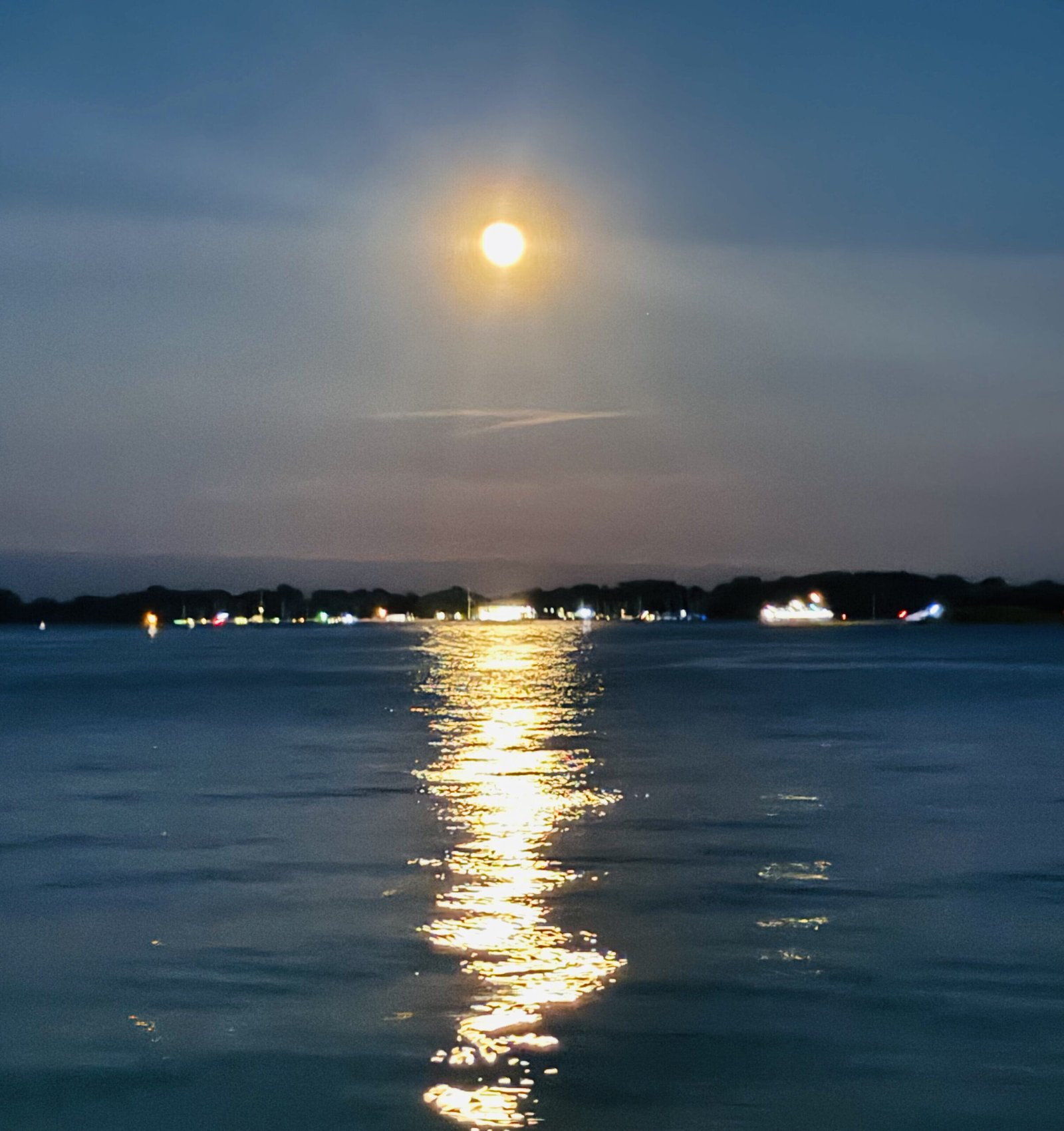
Receive guidance for every new moon and full moon
I created my New Moon and Full Moon Rituals subscription for anyone who wants to connect with the moon but does not always know where to begin.
For every new moon and full moon, you will receive:
- An explanation of the moon’s spiritual energy and zodiac theme
- Guidance based on your sun sign, including what you are being invited to release, heal, welcome or manifest
- A journal prompt that helps you connect the moon’s message to your own life
- A guided meditation to help you complete your ritual and experience the energy for yourself
The first rituals arrive in November. Subscribe now to lock in the introductory price.
If a moon brings something to the surface that you would like to explore more deeply, you can also book a private 1:1 tarot reading.
Frequently asked questions about moon rituals
Do I need to see the moon to perform a moon ritual?
No. A new moon is generally not visible, and weather or buildings may obstruct the full moon. You can connect with the lunar phase from inside your home. Your intention and attention create the ritual.
What is the difference between a new moon ritual and a full moon ritual?
New moon rituals usually focus on beginnings, intentions and what you want to welcome. Full moon rituals tend to centre on illumination, gratitude, completion and emotional release.
Does a moon ritual have to happen at an exact time?
You can perform your ritual on the day of the new moon or full moon, or within a day on either side. Choose a time when you can be present without rushing.
Can beginners perform moon rituals?
Yes. You do not need previous spiritual experience. Start with a few minutes of quiet reflection, one journal prompt and a simple intention or release.
Can I use tarot cards during a moon ritual?
Yes. Tarot or oracle cards can help you explore the theme of the moon and understand what may need your attention. You might ask, “What is this moon inviting me to see?” or “What am I ready to release?”
Can I talk to the moon?
You can speak aloud as part of your ritual. It may feel like prayer, conversation or emotional release. There are no perfect words. Say what feels true and notice how you feel afterwards.
Do moon rituals work?
Moon rituals can create space for reflection, intention, emotional expression and spiritual connection. Their value is personal rather than guaranteed. I have found them deeply uplifting and releasing, and each person may experience them differently.